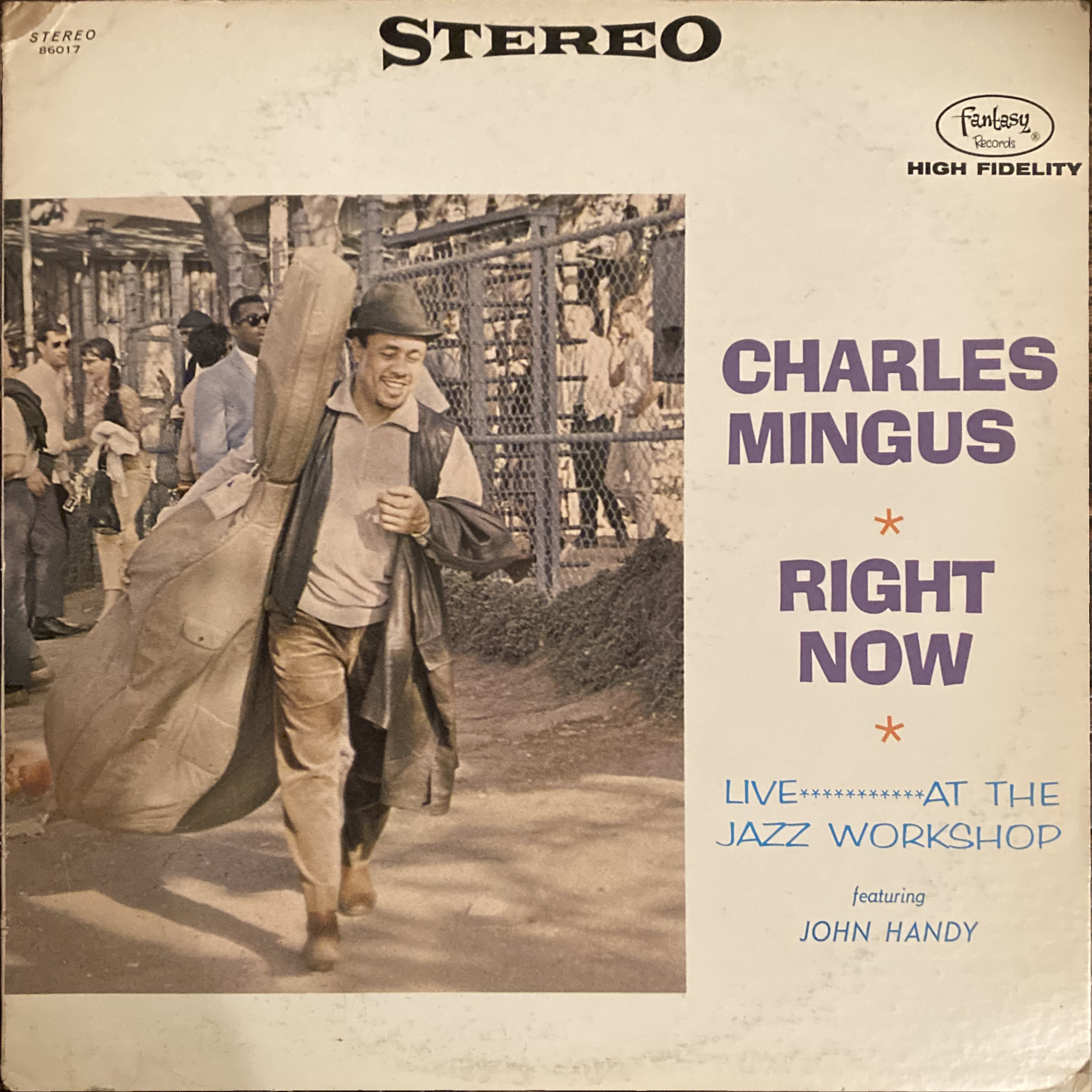
Label: Fantasy
No.: 86017
Title: RIGHT NOW
Musician: CHARLES MINGUS
Recorded: 1964/6/3
Stereo
Cover address: None
Coating 無し
Groove Guard
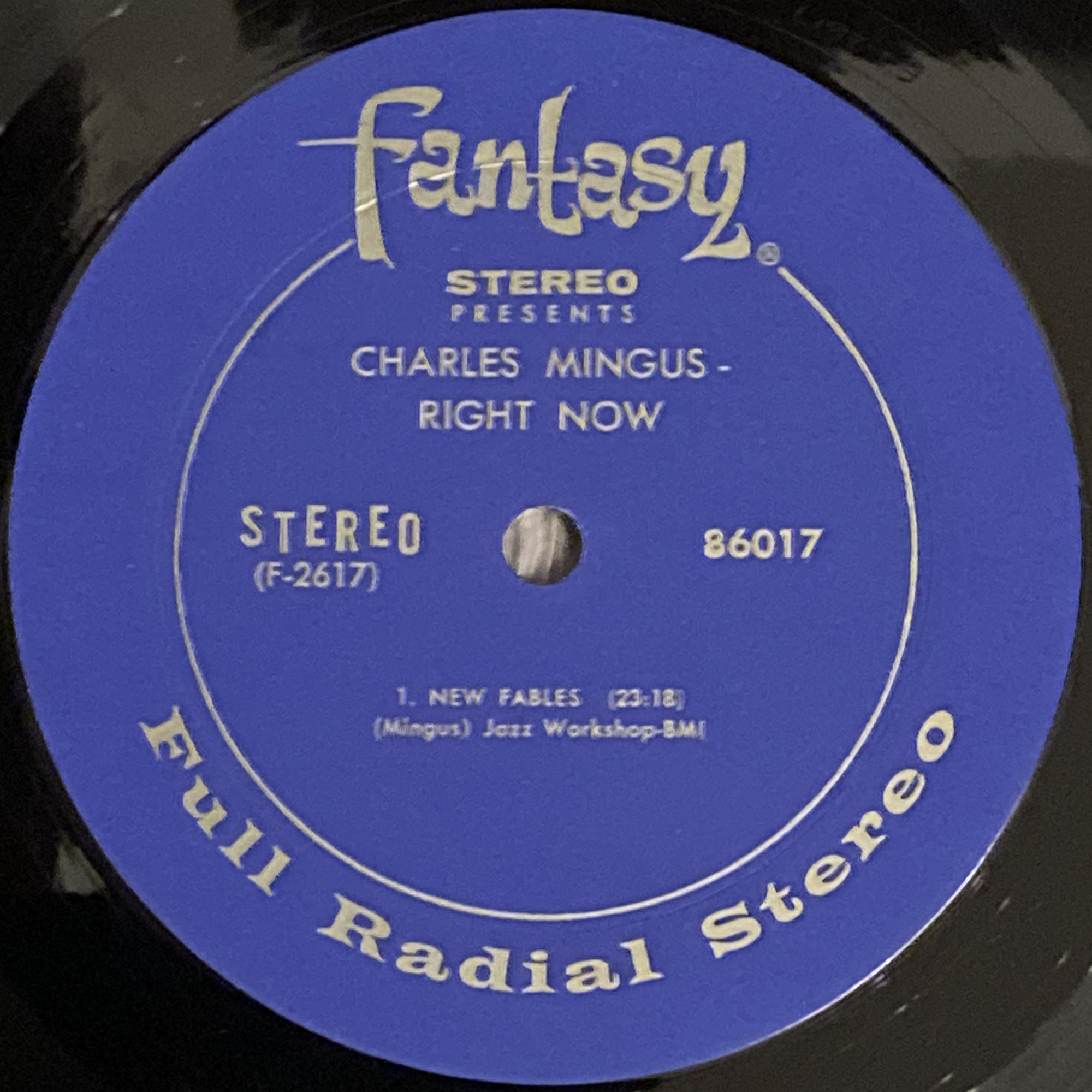
Label Side-A
Blue Background
Silver Letter
Address: None
Deep Groove無し
Dead Wax Info: F2617
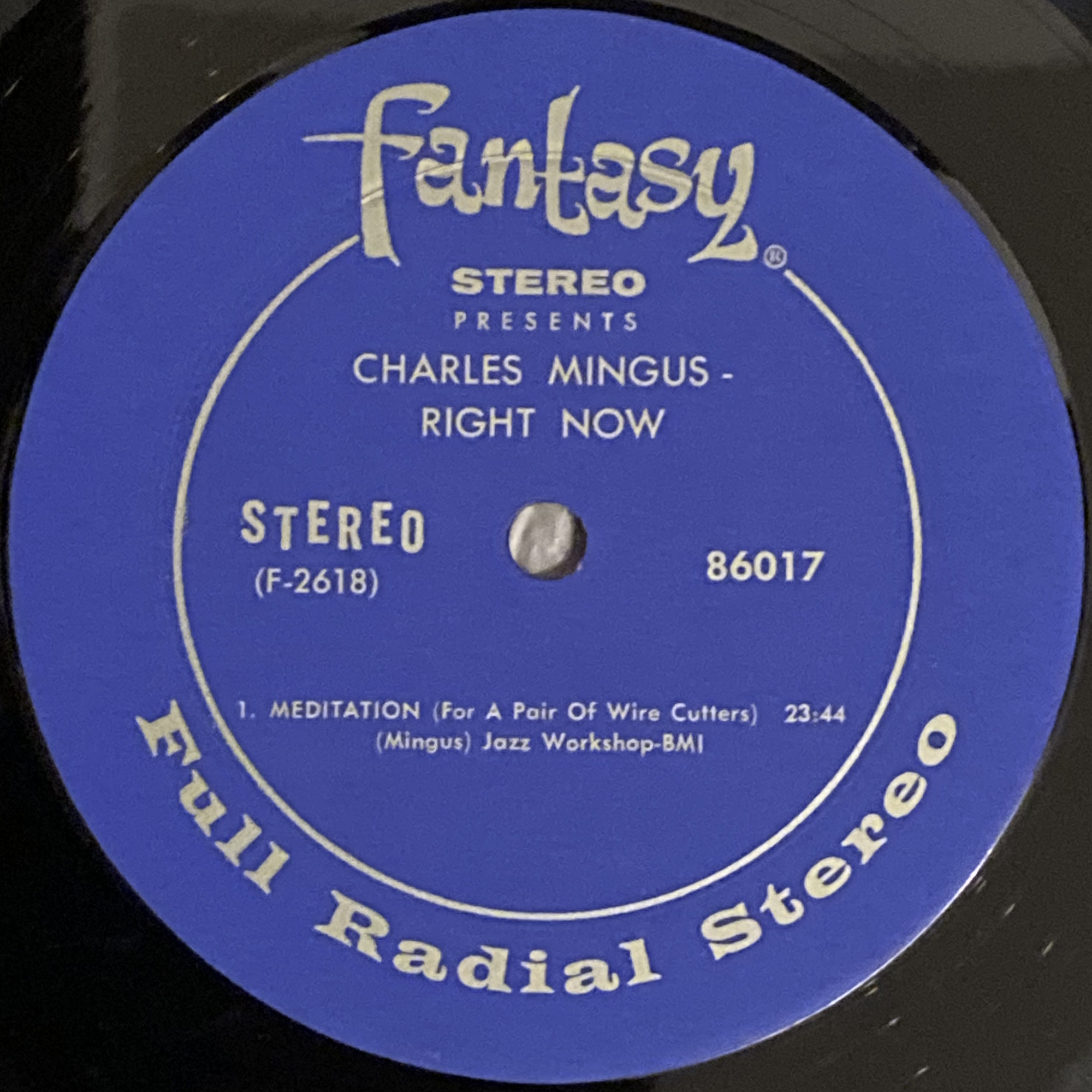
Label Side-B
Blue Background
Silver Letter
Address: None
Deep Groove無し
Dead Wax Info: F2618
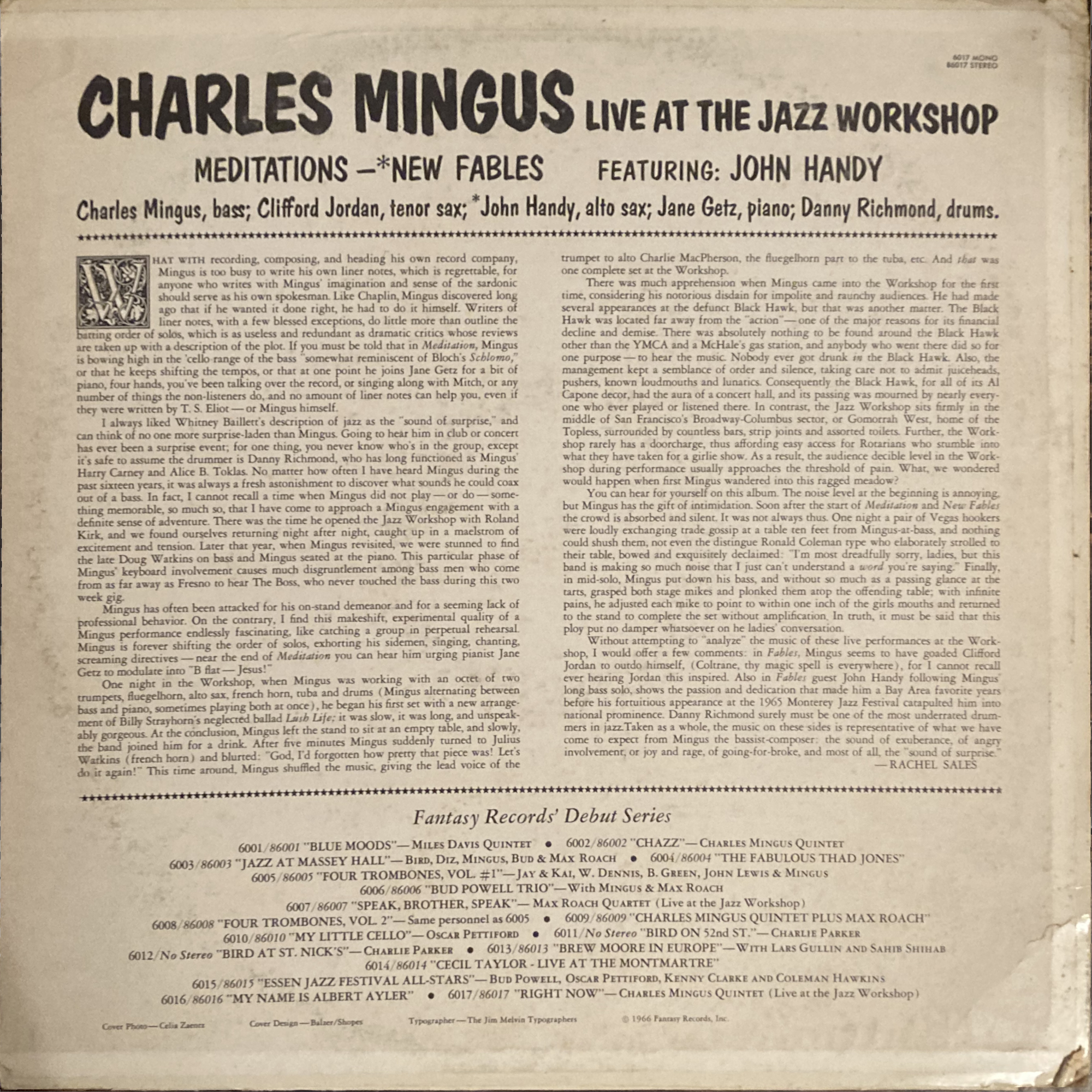
Personnel-
Drums: Dannie Richmond
Bass: Charles Mingus
Piano: Jane Getz
Tenor Sax: Clifford Jordan
Alto Sax: John Handy
Tracks-
Side-A
1) Meditation 23’44”
Side-B
1) New Fables 23’18”
<裏ジャケ原文>
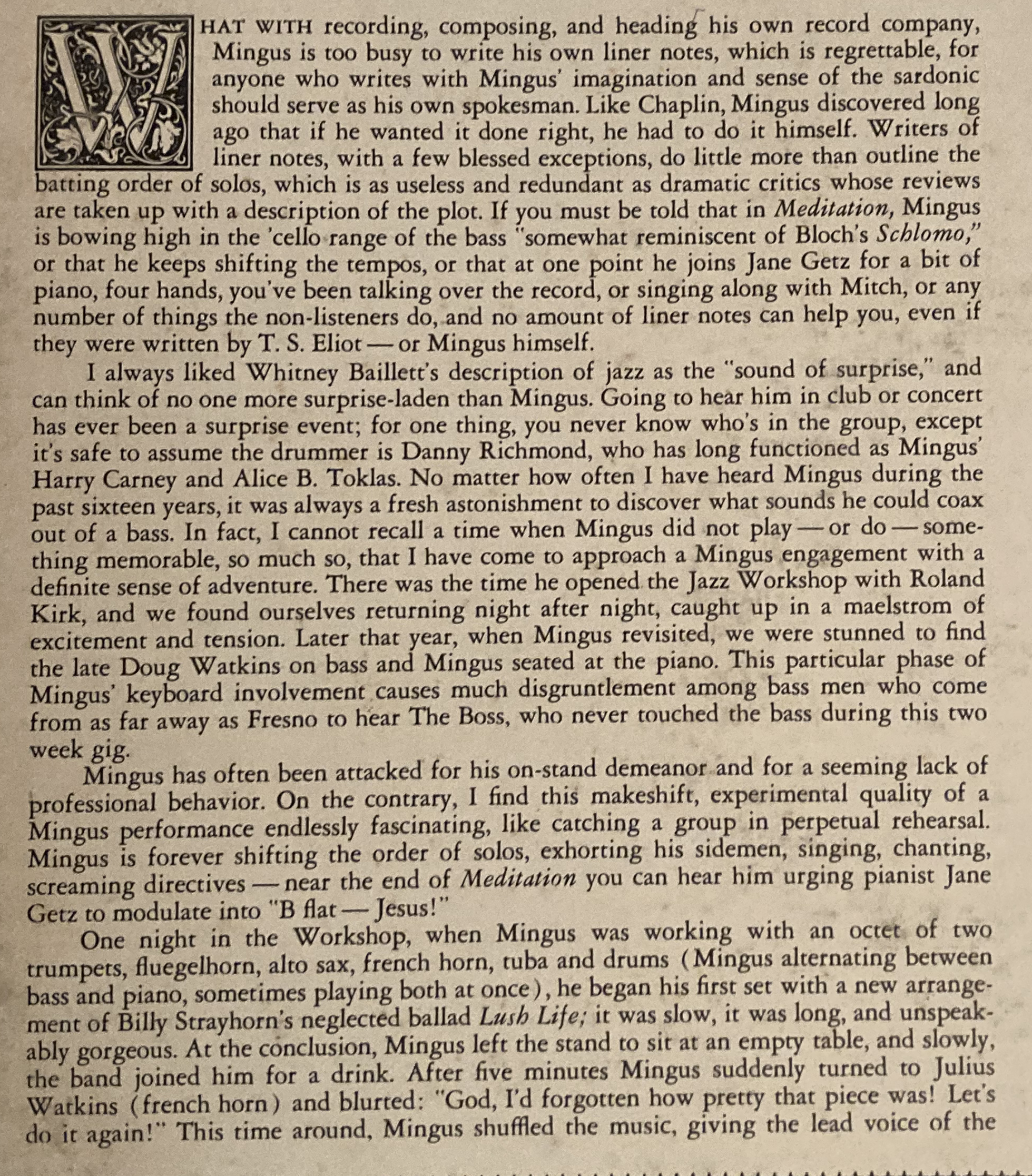
WHAT WITH recording, composing, and heading his own record company, Mingus is too busy to write his own liner notes, which is regrettable, for anyone who writes with Mingus’ imagination and sense of the sardonic should serve as his own spokesman. Like Chaplin, Mingus discovered long ago that if he wanted it done right, he had to do it himself. Writers of liner notes, with a few blessed exceptions, do little more than outline the batting order of solos, which is as useless and redundant as dramatic critics whose reviews are taken up with a description of the plot. If you must be told that in Meditation, Mingus is bowing high in the ‘cello range of the bass “somewhat reminiscent of Bloch’s Schlomo,” or that he keeps shifting the tempos, or that at one point he joins Jane Getz for a bit of piano, four hands, you’ve been talking over the record, or singing along with Mitch, or any number of things the non-listeners do, and no amount of liner notes can help you, even if they were written by T. S. Eliot – or Mingus himself.
I always liked Whitney Baillett’s description of jazz as the “sound of surprise,” and can think of no one more surprise-laden than Mingus. Going to hear him in club or concert has ever been a surprise event; for one thing, you never know who’s in the group, except it’s safe to assume the drummer is Danny Richmond, who has long functioned as Mingus’ Harry Carney and Alice B. Toklas. No matter how often I have heard Mingus during the past sixteen years, it was always a fresh astonishment to discover what sounds he could coax out of a bass. In fact, I cannot recall a time when Mingus did not play or do- some- thing memorable, so much so, that I have come to approach a Mingus engagement with a definite sense of adventure. There was the time he opened the Jazz Workshop with Roland Kirk, and we found ourselves returning night after night, caught up in a maelstrom of excitement and tension. Later that year, when Mingus revisited, we were stunned to find the late Doug Watkins on bass and Mingus seated at the piano. This particular phase of Mingus’ keyboard involvement causes much disgruntlement among bass men who come from as far away as Fresno to hear The Boss, who never touched the bass during this two week gig.
Mingus has often been attacked for his on-stand demeanor and for a seeming lack of professional behavior. On the contrary, I find this makeshift, experimental quality of a Mingus performance endlessly fascinating, like catching a group in perpetual rehearsal. Mingus is forever shifting the order of solos, exhorting his sidemen, singing, chanting, screaming directives – near the end of Meditation you can hear him urging pianist Jane Getz to modulate into “B flat-Jesus!”
One night in the Workshop, when Mingus was working with an octet of two trumpets, fluegelhorn, alto sax, french horn, tuba and drums (Mingus alternating between bass and piano, sometimes playing both at once), he began his first set with a new arrange- ment of Billy Strayhorn’s neglected ballad Lush Life; it was slow, it was long, and unspeak- ably gorgeous. At the conclusion, Mingus left the stand to sit at an empty table, and slowly, the band joined him for a drink. After five minutes Mingus suddenly turned to Julius Watkins (french horn) and blurted: “God, I’d forgotten how pretty that piece was! Let’s do it again!” This time around, Mingus shuffled the music, giving the lead voice of the trumpet to alto Charlie MacPherson, the fluegelhorn part to the tuba, etc. And that was one complete set at the Workshop.
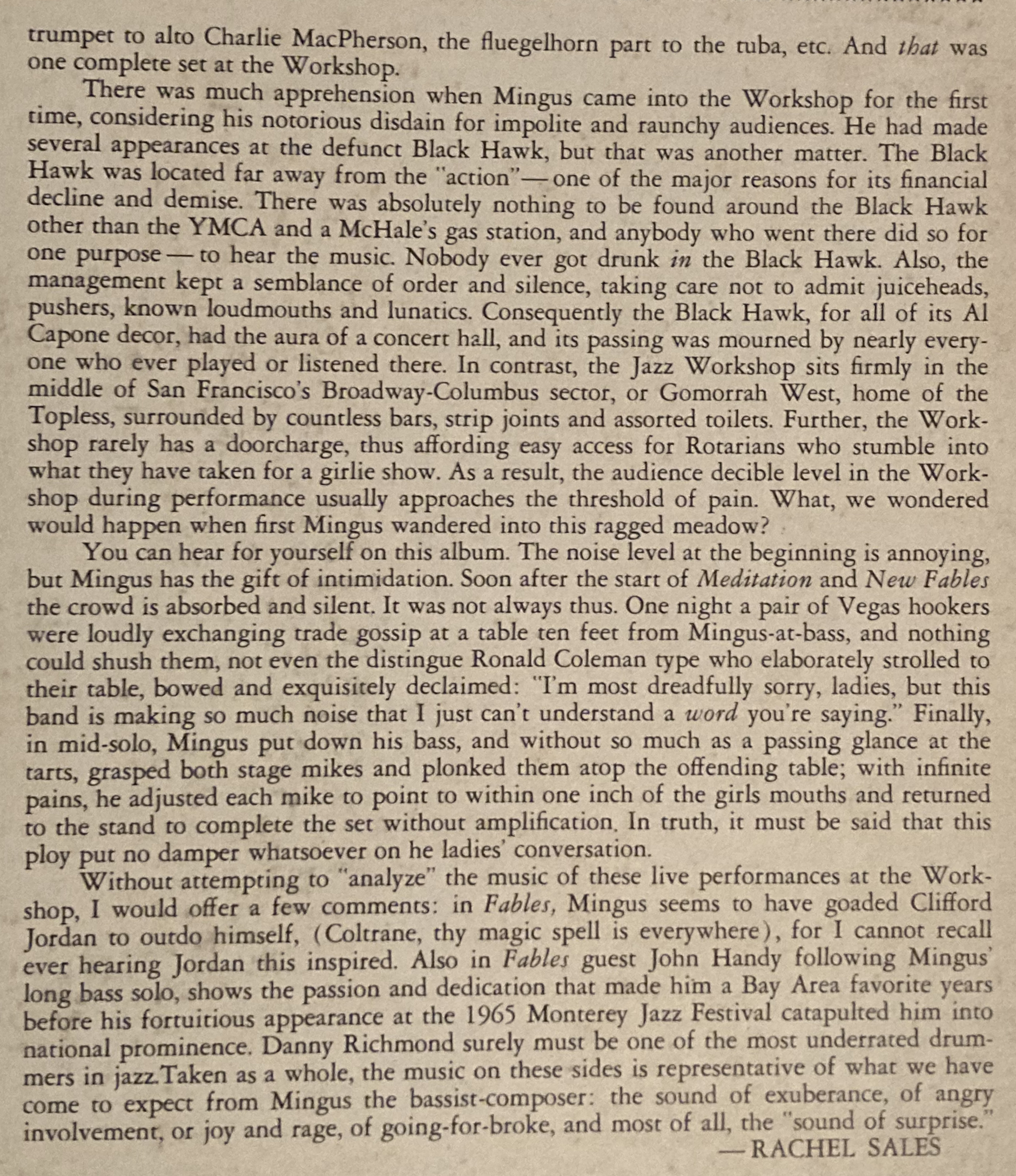
There was much apprehension when Mingus came into the Workshop for the first time, considering his notorious disdain for impolite and raunchy audiences. He had made several appearances at the defunct Black Hawk, but that was another matter. The Black Hawk was located far away from the “action”- one of the major reasons for its financial decline and demise. There was absolutely nothing to be found around the Black Hawk other than the YMCA and a McHale’s gas station, and anybody who went there did so for one purpose to hear the music. Nobody ever got drunk in the Black Hawk. Also, the management kept a semblance of order and silence, taking care not to admit juiceheads, pushers, known loudmouths and lunatics. Consequently the Black Hawk, for all of its Al Capone decor, had the aura of a concert hall, and its passing was mourned by nearly every- one who ever played or listened there. In contrast, the Jazz Workshop sits firmly in the middle of San Francisco’s Broadway-Columbus sector, or Gomorrah West, home of the Topless, surrounded by countless bars, strip joints and assorted toilets. Further, the Work- shop rarely has a doorcharge, thus affording easy access for Rotarians who stumble into what they have taken for a girlie show. As a result, the audience decible level in the Work- shop during performance usually approaches the threshold of pain. What, we wondered would happen when first Mingus wandered into this ragged meadow?
You can hear for yourself on this album. The noise level at the beginning is annoying, but Mingus has the gift of intimidation. Soon after the start of Meditation and New Fables the crowd is absorbed and silent. It was not always thus. One night a pair of Vegas hookers were loudly exchanging trade gossip at a table ten feet from Mingus-at-bass, and nothing could shush them, not even the distingue Ronald Coleman type who elaborately strolled to their table, bowed and exquisitely declaimed: “I’m most dreadfully sorry, ladies, but this band is making so much noise that I just can’t understand a word you’re saying.” Finally, in mid-solo, Mingus put down his bass, and without so much as a passing glance at the tarts, grasped both stage mikes and plonked them atop the offending table; with infinite pains, he adjusted each mike to point to within one inch of the girls mouths and returned to the stand to complete the set without amplification, In truth, it must be said that this ploy put no damper whatsoever on he ladies’ conversation.
Without attempting to “analyze” the music of these live performances at the Work- shop, I would offer a few comments: in Fables, Mingus seems to have goaded Clifford Jordan to outdo himself, (Coltrane, thy magic spell is everywhere), for I cannot recall ever hearing Jordan this inspired. Also in Fables guest John Handy following Mingus’ long bass solo, shows the passion and dedication that made him a Bay Area favorite years before his fortuitious appearance at the 1965 Monterey Jazz Festival catapulted him into national prominence. Danny Richmond surely must be one of the most underrated drum- mers in jazz. Taken as a whole, the music on these sides is representative of what we have come to expect from Mingus the bassist-composer: the sound of exuberance, of angry involvement, or joy and rage, of going-for-broke, and most of all, the “sound of surprise. RACHEL SALES
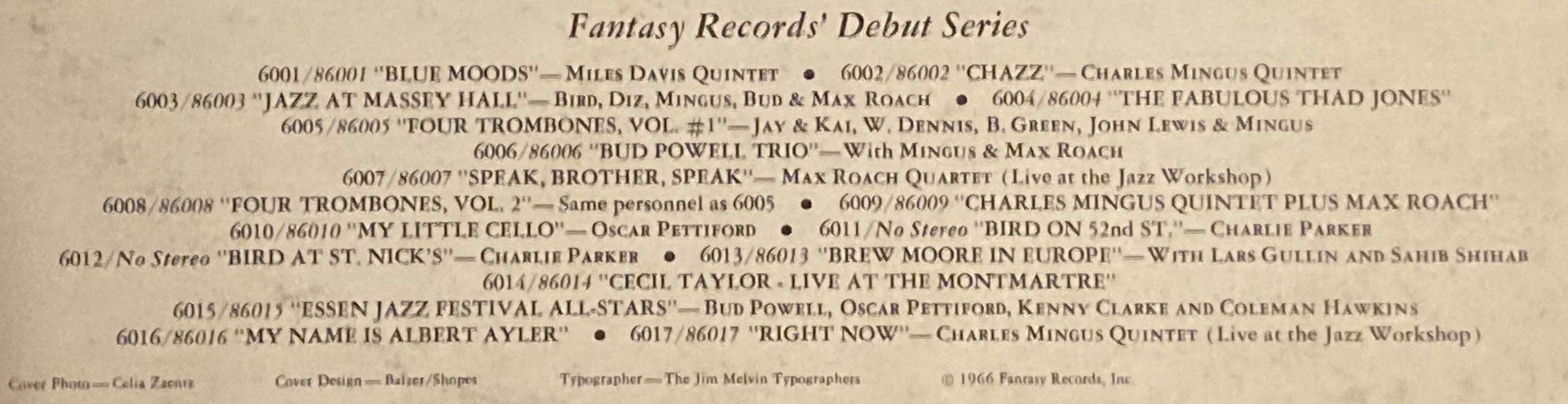
Fantasy Records’ Debut Series
6001/86001 “BLUE MOODS”-MILES DAVIS QUINTET 6002/86002 “CHAZZ”-CHARLES MINGUS QUINTET 6003/86003 “JAZZ AT MASSEY HALL”-BIRD, DIZ, MINGUS, BUD & MAX ROACH 6004/86004 “THE FABULOUS THAD JONES” 6005/86005 “TOUR TROMBONES, VOL. #1”-JAY & KAI, W, DENNIS, B. GREEN, JOHN LEWIS & MINGUS 6006/86006 “BUD POWELL. TRIO”-With MINGUS & MAX ROACH
6007/86007 “SPEAK, BROTHER, SPEAK”- MAX ROACH QUARTET (Live at the Jazz Workshop)
6008/86008 “FOUR TROMBONES, VOL. 2”- Same personnel as 6005 ⚫ 6009/86009 “CHARLES MINGUS QUINTET PLUS MAX ROACH” 6010/86010 “MY LITTLE CELLO”- OSCAR PETTIFORD 6011/No Stereo “BIRD ON 52nd ST,”-CHARLIE PARKER 6013/86013 “BREW MOORE IN EUROPE”-WITH LARS GULLIN AND SAHIB SHIHAB
6012/No Stereo “BIRD AT ST. NICK’S”-CHARLIE PARKER
6014/86014 “CECIL TAYLOR LIVE AT THE MONTMARTRE”
6015/86015 “ESSEN JAZZ FESTIVAL ALL-STARS”- BUD POWELL, OSCAR PETTIFORD, KENNY CLARKE AND COLEMAN HAWKINS 6016/86016 “MY NAME IS ALBERT AYLER”. 6017/86017 “RIGHT NOW”-CHARLES MINGUS QUINTET (Live at the Jazz Workshop)
Cover Photo Celia Zaentz
Cover Design Balzer/Shopes
Typographer-The Jim Melvin Typographers
1966 Fantasy Records, Inc.
<裏ジャケ和訳>
レコーディングや作曲、さらには自身のレコード会社の運営といった仕事に追われ、ミンガスは自分自身のライナーノーツを書く暇がない。これは残念なことだ。ミンガスのような想像力と皮肉のセンスを備えた人物こそ、自らの代弁者となるべきだからである。チャップリンがそうであったように、ミンガスもまた、「物事を完璧に成し遂げたければ、自分でやるしかない」という真理をずっと以前に見抜いていた。ライナーノーツの書き手たちの多くは――ごく例外的な優れた書き手は別として――せいぜいソロの順番を書き連ねる程度のことしかしていない。これは、演劇批評家が劇のあらすじを説明するだけに終始するのと同じくらい、無意味で退屈なことだ。もし『メディテーション(Meditation)』という曲について、ミンガスがベースをチェロのような高音域で弾いている(どこかブロッホの『シェロモ』を彷彿とさせるような響きだ)とか、テンポが頻繁に変わるとか、あるいは途中でジェーン・ゲッツと連弾でピアノを弾いているといった説明をわざわざ読まなければならないのだとしたら、あなたはレコードを聴きながら誰かとお喋りをしていたか、あるいはテレビ番組に合わせて一緒に歌っていたか、といった「音楽を聴いていない人」がやりがちなことをしていたに違いない。そんな状態では、たとえT・S・エリオットが書いたライナーノーツであろうと、あるいはミンガス自身が書いたものであろうと、何の助けにもならないだろう。
ホイットニー・バライエットがジャズを「驚きの響き(sound of surprise)」と表現した言葉を私はずっと気に入っているが、ミンガスほど「驚き」に満ちた人物は他にいない。クラブやコンサートで彼の演奏を聴くことは、常に驚きに満ちた体験だった。誰がバンドに参加しているのかさえ、行ってみるまで分からないのだから(もっとも、ドラマーがダニー・リッチモンドであることだけは確実だ。彼は長年、ミンガスにとってのハリー・カーニーであり、アリス・B・トクラスのような存在であり続けてきた)。過去16年間、何度ミンガスの演奏を聴いたことか。それでも、彼がベースからどんな音を引き出すのかを目の当たりにするたび、私はいつも新鮮な驚きを覚えた。実際、ミンガスが記憶に残るような演奏や行動を見せなかったことなど一度もない。それどころか、彼のステージに足を運ぶことは、私にとって一種の「冒険」のようなものにさえなっている。かつて彼がローランド・カークと共に「ジャズ・ワークショップ」に出演したときのことだが、私たちは興奮と緊張の渦に巻き込まれ、毎晩のようにその店へ通うことになった。その年の後半、ミンガスが再び店にやって来たとき、私たちは驚かされた。ベースには故ダグ・ワトキンスが入り、ミンガス自身はピアノの前に座っていたからだ。この時期のミンガスは、ベースを弾く代わりにピアノを演奏することが多く、それには多くのベーシストたちが不満を抱いていた。彼らは「ボス(ミンガス)」の演奏を聴くためにフレズノのような遠方からわざわざ足を運んでいたのだが、この2週間の公演中、ミンガスがベースを手にすることは一度もなかったのである。
ミンガスは、ステージ上での振る舞いや、プロフェッショナルとは言い難い態度をとることで、しばしば批判の的となってきた。だが私に言わせれば、ミンガスの演奏に見られるこうした即興的で実験的な側面は、限りなく魅力的だ。まるで、いつまでもリハーサルを続けているバンドを覗き見しているような気分にさせられるからだ。ミンガスは絶えずソロの順番を入れ替え、共演者を鼓舞し、歌い、詠唱し、時には叫ぶように指示を飛ばす。『メディテーション(Meditation)』という曲の終盤では、ピアニストのジェーン・ゲッツに向かって、「Bフラットに転調しろ……ジーザス!」と激しく促す彼の声が聞こえてくるほどだ。
ある夜、「ワークショップ」でのこと。ミンガスは8人編成のグループ(トランペット2本、フリューゲルホルン、アルトサックス、フレンチホルン、チューバ、ドラムス)を率いていた。ミンガスはベースとピアノを交互に、時には両方を同時に演奏することさえあった。彼はその最初のセットを、ビリー・ストレイホーンのバラード『ラッシュ・ライフ(Lush Life)』――あまり演奏されることのない名曲だ――の新しいアレンジで始めた。それはスローで、長く、言葉では言い表せないほど美しい演奏だった。曲が終わると、ミンガスはステージを降りて空いているテーブルに座り、バンドのメンバーたちも次々とそこに加わって飲み始めた。5分ほど経ったとき、ミンガスは突然、フレンチホルンのジュリアス・ワトキンスに向かってこう言い放った。「いやあ、この曲がこんなに綺麗だったなんて忘れてたよ! もう一回やろう!」今度は構成をガラリと変え、トランペットが担当していた主旋律をアルトサックスのチャーリー・マクファーソンに、フリューゲルホルンのパートをチューバに割り当てる、といった具合に楽器の役割を入れ替えたのだ。そして、それだけで「ワークショップ」でのワンセットが終わったのである。
ミンガスが初めて「ジャズ・ワークショップ」に足を踏み入れたとき、周囲には大きな不安が漂っていた。というのも、彼は無礼で下品な観客を嫌うことで悪名高かったからだ。かつて存在した「ブラック・ホーク」にも何度か出演していたが、あちらは状況が全く異なっていた。ブラック・ホークは「賑わいの中心地」から遠く離れた場所にあり、それが経営不振と閉鎖の大きな要因の一つとなっていた。周辺にはYMCAとマクヘイルズ・ガソリンスタンドくらいしかなく、そこを訪れる人々はただ一つ、「音楽を聴く」という目的のためだけに足を運んでいた。ブラック・ホークで泥酔する者などいなかった。さらに店側は、酔っ払い、麻薬の売人、騒ぎ立てる連中、あるいは常軌を逸した人物の入店を拒むなどして、秩序と静けさを保っていた。そのため、アル・カポネの時代を思わせるような内装でありながら、ブラック・ホークにはコンサートホールのような気品が漂っていた。店がなくなったとき、そこで演奏した者も、音楽に耳を傾けた者も、その多くが別れを惜しんだものだ。対照的に、「ジャズ・ワークショップ」はサンフランシスコのブロードウェイ・コロンバス地区――いわば「西のゴモラ」、トップレス・ショーがひしめく歓楽街――のど真ん中に位置している。周囲には数え切れないほどのバーやストリップ劇場、そして掃き溜めのような場所が立ち並んでいる。おまけに、この店には入場料がないことが多く、ストリップ・ショーか何かと勘違いして迷い込んできたような連中が、気軽に入ってこられる環境なのだ。その結果、演奏中の店内は、耳が痛くなるほどの凄まじい騒音に包まれるのが常だった。さて、そんな荒んだ場所にミンガスが足を踏み入れたら、一体どうなることか――私たちは固唾をのんで見守っていた。
その答えは、このアルバムを聴けばわかるだろう。演奏の冒頭こそ騒がしくて耳障りだが、ミンガスには相手を威圧する天賦の才があった。やがて『メディテーション・アンド・ニュー・フェイブルズ(Meditation and New Fables)』が始まると、観客たちは音楽に引き込まれ、静まり返った。もっとも、いつもそうだったわけではないのだが。ある夜、ラスベガスの娼婦二人が、ベースを弾くミンガスのわずか3メートルほど先で、仕事の話を大声で交わしていた。何をしても彼女たちを静まらせることはできなかった。ロナルド・コールマンを彷彿とさせるような洗練された紳士が、わざわざ彼女たちのテーブルまで歩み寄り、丁寧に一礼してこう言い放った。「大変申し訳ありませんが、バンドの音が大きすぎて、お二人の会話が全く聞き取れないのです」。ついに、ソロの途中でミンガスがベースを置いた。彼はその娼婦たちに目もくれず、ステージ上のマイクを両方とも掴むと、彼女たちのテーブルの上にドンと置いた。そして、マイクの向きを彼女たちの口元からわずか1インチ(約2.5センチ)の距離にまで入念に調整すると、自分は演奏場所に戻り、アンプなしのままセットを最後までやり遂げた。実のところ、この行動をとっても、彼女たちの会話の勢いが削がれることは全くなかったのだが。
「ワークショップ」でのライブ演奏について、音楽的な「分析」を試みるつもりはないが、いくつかコメントを述べておきたい。『フェイブルズ(Fables)』において、ミンガスはクリフォード・ジョーダンを焚きつけ、彼自身の限界を超えさせたようだ(コルトレーンの魔法が至るところに息づいている)。これほどインスピレーションに満ちたジョーダンの演奏は、これまで聴いた記憶がない。同じく『フェイブルズ』では、ミンガスの長いベース・ソロの後にゲストのジョン・ハンディが登場する。彼は、1965年のモントレー・ジャズ・フェスティバルでの偶然の出演によって全米的な注目を集めるずっと以前から、ベイエリアで絶大な人気を誇っていたが、その理由となる情熱と献身的な姿勢がここには表れている。ダニー・リッチモンドは、ジャズ界で最も過小評価されているドラマーの一人であるに違いない。全体として、ここに収められた音楽は、ベーシスト兼作曲家ミンガスに私たちが期待するものを体現している。それは、溢れんばかりの活力、激しいまでの没入、喜びと怒り、すべてを賭けた全力の演奏、そして何よりも「驚きに満ちたサウンド」である。――レイチェル・セールス
※訳文の制作にはGoogleドライブとGoogle翻訳のお世話になりました。

コメント